Posted on Leave a comment

Why You Should Join Local Blooms Before You Have Flowers to Sell


Every week I hear some version of this:

“I love what you’re building. I’m planning to grow flowers this year… I’ll sign up once I have blooms ready.”

And I understand that instinct completely.

But here’s the truth:

The best time to join Local Blooms is before you have flowers to sell.

Let me tell you why.


1. You Lock In the Best Membership Rate

Our FIRST500 grower promotion ends February 28.

That rate will not be offered again this year.

If you’re planning to grow and sell flowers at any point this season — even if your first bouquet won’t be ready until June — joining now means you secure the best rate available.

You don’t need to have inventory listed.
You don’t need photos uploaded.
You don’t need to be “ready.”

You just need the intention.


2. You Have Time to Build a Beautiful Profile (Without Pressure)

Spring gets busy fast.

When flowers are blooming, you want to be harvesting, arranging, and enjoying the work — not learning a new platform for the first time.

Joining early gives you time to:

  • Write your grower story
  • Upload photos
  • Set your pickup locations (including multiple locations — a new feature!)
  • Customize availability for each pickup location
  • Practice listing products
  • Get comfortable with your dashboard

When your flowers are ready, you’ll already be set up.


3. You Can Learn Before the Hustle Begins

Selling flowers for the first time can feel intimidating.

What should I charge?
How many bouquets should I offer?
What if no one buys?

Joining now lets you explore, ask questions, and build confidence gradually.

There’s something powerful about stepping into the role of “grower” before the first stem is cut.


4. You Don’t Need a Farm to Make an Impact

Local Blooms was built for backyard growers and small-scale flower farmers.

You don’t need acres.
You don’t need wholesale accounts.
You don’t need complex inventory systems.

I started in less than 200 square feet in my own backyard in Colorado Springs. Some weeks I sold 5 bouquets, some weeks none. That was enough to cover seed costs, bless friends, and feel the joy of sharing what I grew.

Even selling three bouquets a week makes a difference.

Small gardens. Big impact.


5. You’re Part of Something Bigger

This isn’t just about selling flowers.

It’s about changing how people buy flowers in our country.

Right now, when someone wants to “send flowers,” they default to a wire-service florist. Most flowers are imported. Most people have no idea where they were grown.

I believe we can change that.

I believe when someone logs onto Local Blooms and types in an address, they should see pages of beautiful, fresh, locally grown arrangements from growers in their own community.

That only happens if growers say yes.

Even if it’s small.
Even if it’s part-time.
Even if it’s just a handful of bouquets.


Join Now — Even If Your First Bouquet Is Months Away

If you’re planning to grow flowers this year, don’t wait until you feel “ready.”

Join now.
Set up slowly.
Learn the platform.
Dream a little.

Lock in the FIRST500 rate before February 28.

You can start with zero inventory and still take the first step.

Because sometimes the most important seed we plant isn’t in the soil.

It’s the decision to begin.

Posted on Leave a comment

What Are Seasonal Flowers?

A guide to buying blooms that are meant for this moment

When we talk about “seasonal flowers” at Local Blooms, we’re not using a trendy marketing phrase.

We’re talking about flowers that are naturally blooming outdoors — in real soil, under real skies — in your region, right now.

Seasonal flowers are fresher. Often more fragrant. More aligned with your local climate. And when you buy them from a nearby grower, you’re supporting a real person — not a global supply chain.

Let’s break it down.


What Does “Seasonal Flowers” Actually Mean?

Seasonal flowers are blooms that:

  • Naturally grow and bloom during a specific time of year
  • Do not require long-distance shipping
  • Reflect your region’s daylight and climate
  • Are harvested at peak freshness

A tulip in April? Seasonal.
A dahlia in August? Seasonal.
A peony in December (without local greenhouse production)? Likely imported and forced.

When you choose seasonal flowers, you are choosing blooms that are meant for this moment.


Spring Seasonal Flowers (March–May)

Spring flowers feel hopeful and fresh. Many grow from bulbs or thrive in cool temperatures.

Common spring blooms include:

  • Tulips
  • Daffodils
  • Ranunculus
  • Anemones
  • Snapdragons
  • Sweet peas
  • Hellebores
  • Flowering branches (cherry blossom, forsythia)

Spring flowers often symbolize renewal and new beginnings — which is why they feel so special after winter.


Summer Seasonal Flowers (June–August)

Summer is abundance season. Gardens are full. Colors are bold.

Common summer blooms include:

  • Zinnias
  • Cosmos
  • Sunflowers
  • Dahlias
  • Lisianthus
  • Black-eyed Susans
  • Celosia
  • Queen Anne’s lace
  • Fresh herbs like basil or mint

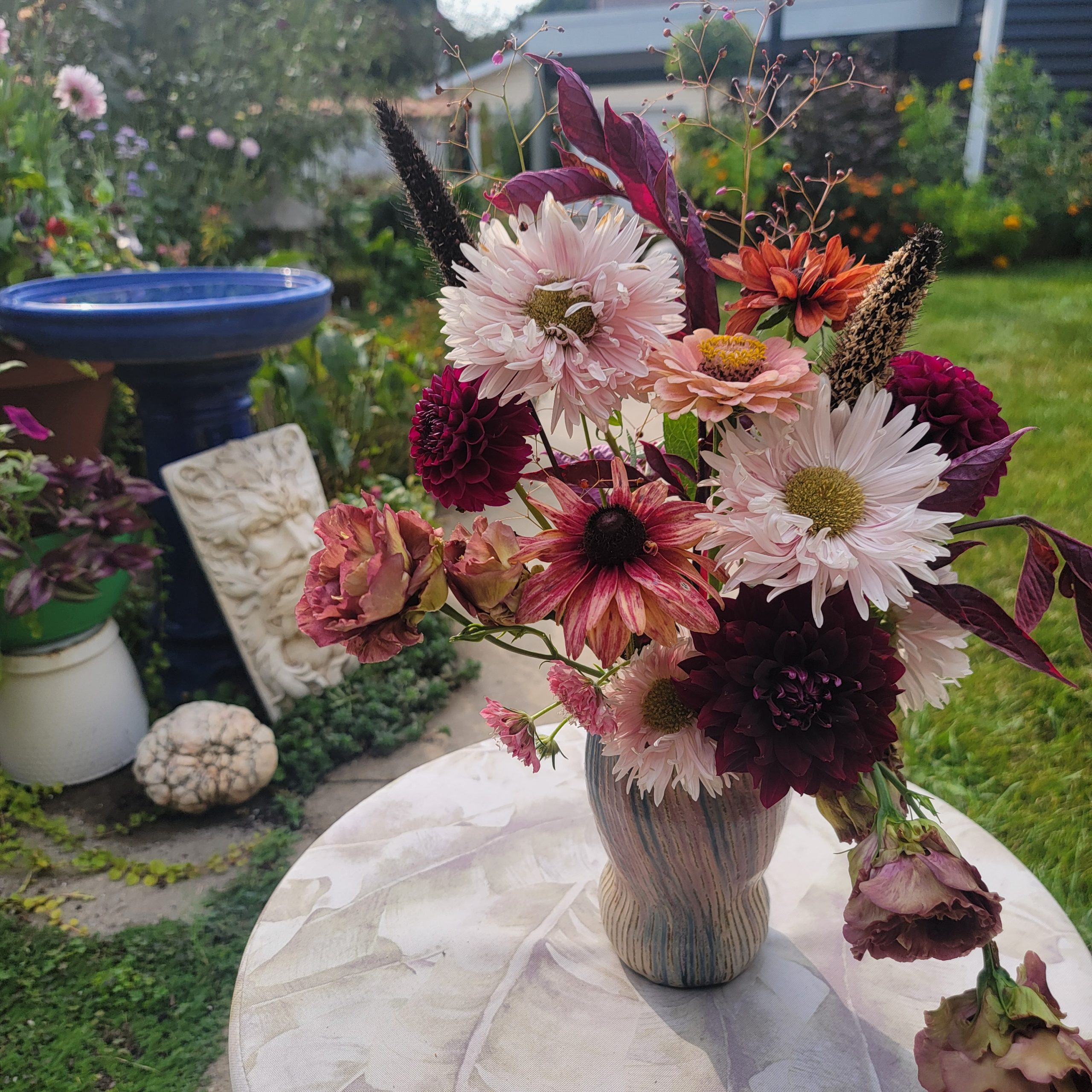
These flowers thrive in heat and long daylight hours — and they’re stunning when harvested locally and fresh.


Fall Seasonal Flowers (September–November)

Fall flowers are rich and textured. Think warm tones and dramatic shapes.

Common fall blooms include:

  • Chrysanthemums
  • Dahlias
  • Marigolds
  • Amaranthus
  • Asters
  • Strawflower
  • Ornamental grasses
  • Seed pods and foliage

Fall bouquets often include layers of texture — grasses, pods, branches — creating arrangements that feel earthy and grounded.


Winter Seasonal Flowers (December–February)

In colder climates, winter is quieter — but not empty.

Seasonal winter flowers may include:

  • Evergreens
  • Hellebores
  • Paperwhites
  • Amaryllis
  • Winter branches with berries
  • Dried flowers

In milder regions, growers may also have early ranunculus or anemones.

Seasonal does not always mean abundant. Sometimes it means simple and intentional.


Why Seasonal Flowers Matter

When flowers are grown in season:

  • They travel fewer miles
  • They are cut closer to peak bloom
  • They often last longer in the vase
  • They support local growers
  • They align with natural pollinator cycles

Many imported flowers travel thousands of miles and are stored in refrigeration before reaching a florist.

Seasonal flowers were likely growing in soil just days ago.

There is a difference — and you can see it.


How to Find Seasonal Flowers Near You

1. Search by location on Local Blooms

Enter your address and browse growers near you.

2. Ask what’s blooming right now

Most small-scale growers harvest based on what is ready — not what is trending.

3. Follow local flower farms

Growers often share weekly bloom updates on social media.

4. Embrace surprise

Seasonal buying sometimes means letting go of a specific flower request and trusting what is beautiful right now.

That is part of the magic.


A Different Way to Buy Flowers

At Local Blooms, we believe flowers should reflect the season you are living in.

Spring does not need sunflowers.
Fall does not need peonies.
Winter does not need forced abundance.

When you choose seasonal flowers, you are:

  • Supporting backyard gardeners and small farms
  • Reducing environmental impact
  • Bringing fresher, more fragrant blooms into your home
  • Helping change the way people buy flowers in this country

Seasonal flowers remind us to slow down. To notice. To celebrate what is blooming right now.

And that feels like a beautiful way to live.


Ready to See What’s in Season Near You?

Search your location on Local Blooms and discover what is blooming in your community today.

Your bouquet should support a human — not a supply chain.

Posted on Leave a comment

The Language of Flowers: Tulips – Meaning, Symbolism, and Why Local Tulips Matter

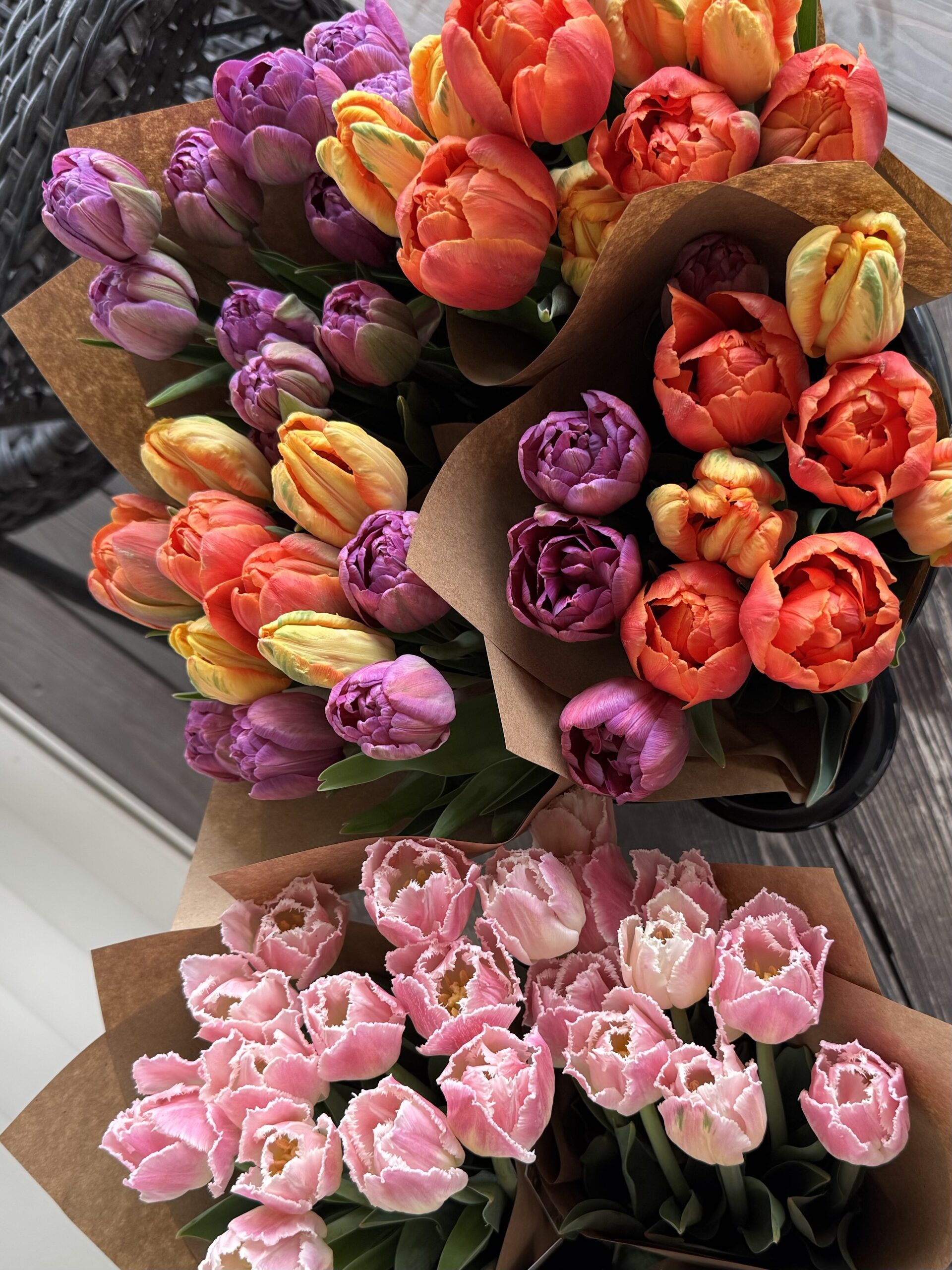
photo credit: Wild Bird Farm

Tulips are one of the most recognizable spring flowers — bright, joyful, and full of meaning. But behind their simple beauty is a powerful story about love, patience, and seasonal growth.

What Do Tulips Symbolize?

In the language of flowers, tulips traditionally represent perfect love and new beginnings. They’ve long been given to express deep affection, devotion, and hope for what’s ahead.

Tulips are often associated with fresh starts — new seasons, new chapters, and moments of transition.

Tulips and the Meaning of Patience

Beyond love and renewal, tulips also symbolize something quieter:
the ability to wait for good things to come.

Tulip bulbs are planted in the fall and remain underground throughout winter. They require months of cold dormancy before they can bloom. This waiting period isn’t optional — it’s essential.

Tulips remind us that growth doesn’t always look active. Sometimes, the most important work happens beneath the surface.

A Brief History of Tulips

Tulips did not originate in Western Europe, as many people assume. They are native to Central Asia and were cultivated extensively within the Ottoman Empire, where they became symbols of beauty, abundance, and refinement.

By the 16th century, tulips were highly prized in Ottoman culture, often featured in art, textiles, and gardens. Their elegance and symmetry made them symbols of harmony and devotion — flowers associated with care and intention.

Tulips were later introduced to Europe, where they became especially popular in the Netherlands. During the 17th century, their rarity and beauty led to a period known as Tulip Mania, when bulbs were treated as luxury items and symbols of status and aspiration.

While Tulip Mania is often remembered for its economic excess, it also cemented tulips as flowers of value — not everyday, disposable blooms, but something worth waiting for, investing in, and caring for.

Over time, tulips became deeply connected to the arrival of spring itself, representing renewal after hardship and beauty following long winters.

Why Locally Grown Tulips Are Different

Tulips are a perfect example of why buying local flowers matters.

Locally grown tulips:

  • Are harvested fresh, not shipped long distances
  • Continue growing and changing in the vase
  • Reflect the true timing of spring in your region

Imported tulips are bred for travel and uniformity. Local tulips are grown for beauty, movement, and connection to place.

Choosing Flowers That Follow the Seasons

Buying local flowers means accepting what’s blooming now — not forcing flowers to arrive out of season.

In late winter and early spring, tulips represent patience rewarded. They are a celebration of waiting, timing, and trust.

Choose Local Flowers This Spring

Tulips remind us that love doesn’t rush. Growth doesn’t hurry. And beauty can take its time.

When you choose locally grown flowers, you support growers who work with the seasons — and flowers that tell a truer story.

Choose flowers grown close to home.

Shop flowers from local growers across the U.S. – find flowers grown in your community