
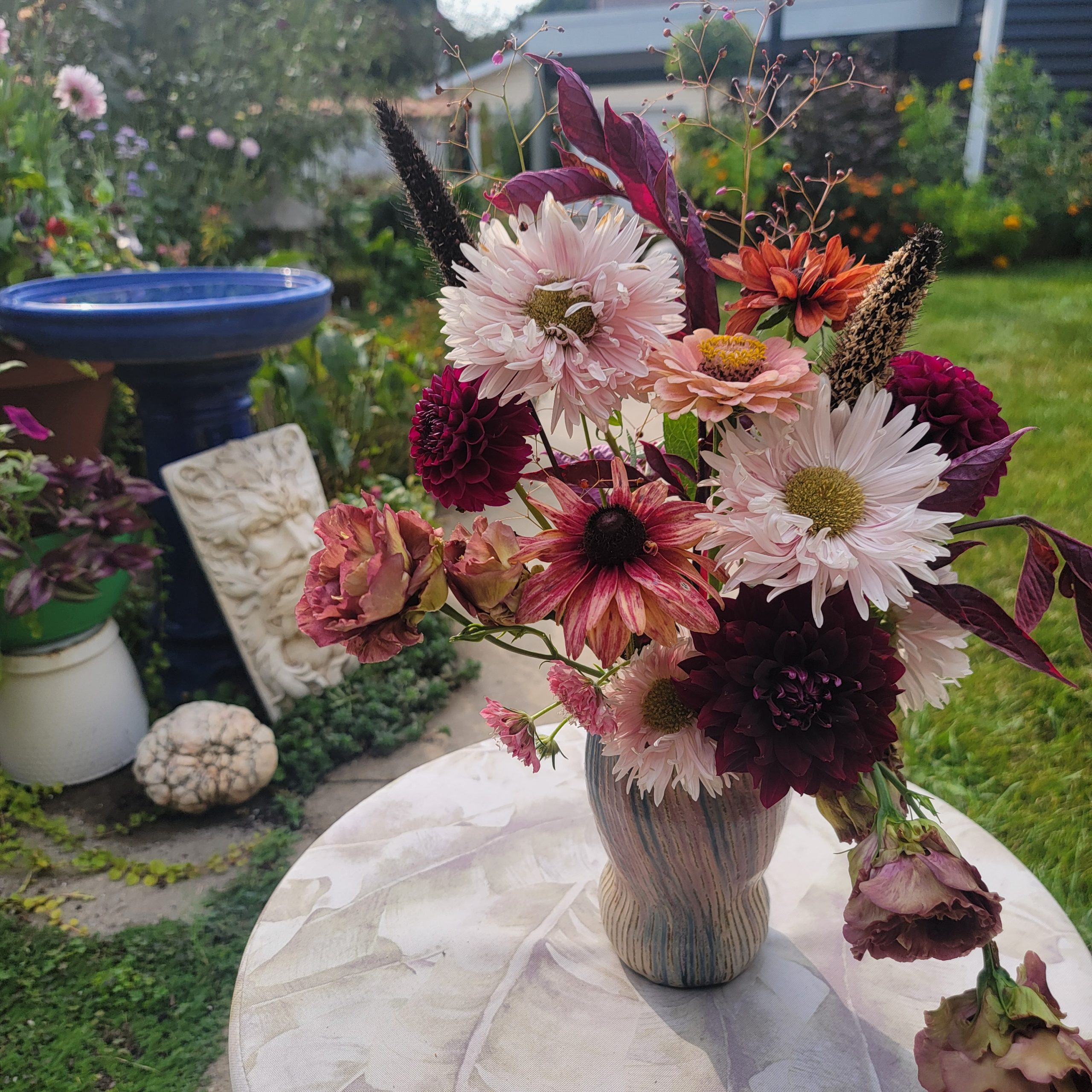
A guide to buying blooms that are meant for this moment
When we talk about “seasonal flowers” at Local Blooms, we’re not using a trendy marketing phrase.
We’re talking about flowers that are naturally blooming outdoors — in real soil, under real skies — in your region, right now.
Seasonal flowers are fresher. Often more fragrant. More aligned with your local climate. And when you buy them from a nearby grower, you’re supporting a real person — not a global supply chain.
Let’s break it down.
What Does “Seasonal Flowers” Actually Mean?
Seasonal flowers are blooms that:
- Naturally grow and bloom during a specific time of year
- Do not require long-distance shipping
- Reflect your region’s daylight and climate
- Are harvested at peak freshness
A tulip in April? Seasonal.
A dahlia in August? Seasonal.
A peony in December (without local greenhouse production)? Likely imported and forced.
When you choose seasonal flowers, you are choosing blooms that are meant for this moment.
Spring Seasonal Flowers (March–May)
Spring flowers feel hopeful and fresh. Many grow from bulbs or thrive in cool temperatures.
Common spring blooms include:
- Tulips
- Daffodils
- Ranunculus
- Anemones
- Snapdragons
- Sweet peas
- Hellebores
- Flowering branches (cherry blossom, forsythia)
Spring flowers often symbolize renewal and new beginnings — which is why they feel so special after winter.
Summer Seasonal Flowers (June–August)
Summer is abundance season. Gardens are full. Colors are bold.
Common summer blooms include:
- Zinnias
- Cosmos
- Sunflowers
- Dahlias
- Lisianthus
- Black-eyed Susans
- Celosia
- Queen Anne’s lace
- Fresh herbs like basil or mint
These flowers thrive in heat and long daylight hours — and they’re stunning when harvested locally and fresh.
Fall Seasonal Flowers (September–November)
Fall flowers are rich and textured. Think warm tones and dramatic shapes.
Common fall blooms include:
- Chrysanthemums
- Dahlias
- Marigolds
- Amaranthus
- Asters
- Strawflower
- Ornamental grasses
- Seed pods and foliage
Fall bouquets often include layers of texture — grasses, pods, branches — creating arrangements that feel earthy and grounded.
Winter Seasonal Flowers (December–February)
In colder climates, winter is quieter — but not empty.
Seasonal winter flowers may include:
- Evergreens
- Hellebores
- Paperwhites
- Amaryllis
- Winter branches with berries
- Dried flowers
In milder regions, growers may also have early ranunculus or anemones.
Seasonal does not always mean abundant. Sometimes it means simple and intentional.
Why Seasonal Flowers Matter
When flowers are grown in season:
- They travel fewer miles
- They are cut closer to peak bloom
- They often last longer in the vase
- They support local growers
- They align with natural pollinator cycles
Many imported flowers travel thousands of miles and are stored in refrigeration before reaching a florist.
Seasonal flowers were likely growing in soil just days ago.
There is a difference — and you can see it.
How to Find Seasonal Flowers Near You
1. Search by location on Local Blooms
Enter your address and browse growers near you.
2. Ask what’s blooming right now
Most small-scale growers harvest based on what is ready — not what is trending.
3. Follow local flower farms
Growers often share weekly bloom updates on social media.
4. Embrace surprise
Seasonal buying sometimes means letting go of a specific flower request and trusting what is beautiful right now.
That is part of the magic.
A Different Way to Buy Flowers
At Local Blooms, we believe flowers should reflect the season you are living in.
Spring does not need sunflowers.
Fall does not need peonies.
Winter does not need forced abundance.
When you choose seasonal flowers, you are:
- Supporting backyard gardeners and small farms
- Reducing environmental impact
- Bringing fresher, more fragrant blooms into your home
- Helping change the way people buy flowers in this country
Seasonal flowers remind us to slow down. To notice. To celebrate what is blooming right now.
And that feels like a beautiful way to live.
Ready to See What’s in Season Near You?
Search your location on Local Blooms and discover what is blooming in your community today.
Your bouquet should support a human — not a supply chain.
