Posted on Leave a comment

Local Flowers Aren’t Amazon Prime. That’s What Makes Them Special

We live in a world where we’ve come to expect almost everything to be available immediately.

Need a phone charger? It’ll be on your doorstep tomorrow.

Need a birthday gift? You can have one delivered the same day.

We’re so accustomed to convenience that it’s easy to assume flowers work the same way.

But local flowers are different.

And honestly, that’s exactly what makes them so special.

Your Bouquet May Still Be Growing

When you order from a local flower grower, you’re not choosing from inventory that was harvested weeks ago, boxed up, and shipped across continents before landing in a grocery store cooler.

You’re often ordering flowers that are still blooming in the field.

That means your bouquet doesn’t exist yet.

It’s created specifically for you.

Growing Flowers Is More Than Picking Flowers

One of the biggest misconceptions about local flower farming is that when an order comes in, the grower simply walks out to the field, cuts a few flowers, wraps them up, and calls it a day.

The reality is much more intentional.

Long before your bouquet ever reaches your hands, someone has spent months preparing the soil, starting seeds, transplanting seedlings, watering, weeding, supporting plants, monitoring pests and diseases, and watching the weather.

Then comes harvest.

Flowers aren’t harvested whenever it’s convenient. They’re harvested when they’re at the perfect stage for the longest vase life. Many growers begin harvesting in the early morning while temperatures are cool because that’s when flowers are at their freshest.

After harvesting, the work continues.

Leaves are removed. Stems are trimmed. Flowers are conditioned in clean water so they can fully hydrate. Some varieties need several hours before they’re ready to be arranged.

Only then does bouquet design begin.

Every bouquet reflects what’s naturally in season that week rather than pulling identical stems from a warehouse shelf. That’s one of the joys of buying local—you receive flowers that truly represent the season and the place where they were grown.

Most Growers Are Wearing Every Hat

Many Local Blooms growers aren’t running large commercial flower farms with full-time employees.

They’re small business owners.

They’re gardeners.

They’re parents.

Some have full-time jobs outside the farm.

On any given day they might be:

  • Planting the next succession of flowers.
  • Pulling weeds.
  • Harvesting before sunrise.
  • Answering customer messages.
  • Designing bouquets.
  • Making deliveries.
  • Updating their websites.
  • Posting on social media.
  • Balancing family responsibilities.

It’s a labor of love—and one they’re proud to do.

Why Planning Ahead Matters

Does this mean you can never get flowers the same day?

Not at all.

Many growers do have bouquets available for immediate pickup or delivery, especially during peak season. It never hurts to check.

But if you know you’ll need flowers for a birthday, anniversary, dinner party, thank-you gift, or other special occasion, planning ahead allows your grower to create something truly exceptional.

Instead of fitting an order into an already full harvest day, they can harvest specifically for you, select the best blooms, allow proper conditioning time, and thoughtfully design your bouquet.

The result is often fresher flowers, longer vase life, and a more meaningful gift.

Slow Flowers Are Like Slow Food

The Slow Food movement reminds us that some things are worth waiting for because they’re fresher, more sustainable, and more connected to the people who produce them.

Local flowers are much the same.

They’re seasonal instead of standardized.

They’re harvested at the right moment instead of shipped before they’re fully open.

They’re designed by the person who grew them.

They’re rooted in a particular place and season.

That care can’t be rushed.

More Than a Bouquet

When you buy local flowers, you’re bringing home something that reflects months of work, careful timing, creativity, and craftsmanship.

You’re supporting a small business.

You’re supporting your local economy.

You’re helping preserve small farms and gardens.

You’re encouraging sustainable growing practices.

And you’re giving someone a gift that simply couldn’t have existed without the hands that grew it.

That’s a very different experience than pulling a bouquet from a grocery store cooler.

It’s more personal.

More thoughtful.

And, we think, more beautiful.

Looking for Something Extra Special?

Browse Local Blooms growers and plan ahead for your next bouquet. Whether you’re celebrating a birthday, anniversary, welcoming a new baby, thanking a friend, or simply brightening your own home, your local grower can create something harvested, designed, and arranged just for you.

Are You a Flower Grower?

You’re already doing the hard work of planting, weeding, harvesting, and designing beautiful flowers. Let Local Blooms take website maintenance and order management off your plate so you can spend more time growing.

Our Grower Membership Sale is happening now. Join today and save $10 with code SUMMER2026.
Posted on Leave a comment

Meet the Bee Behind Your Bouquet

Your Local Bouquet Is Part of a Living Ecosystem

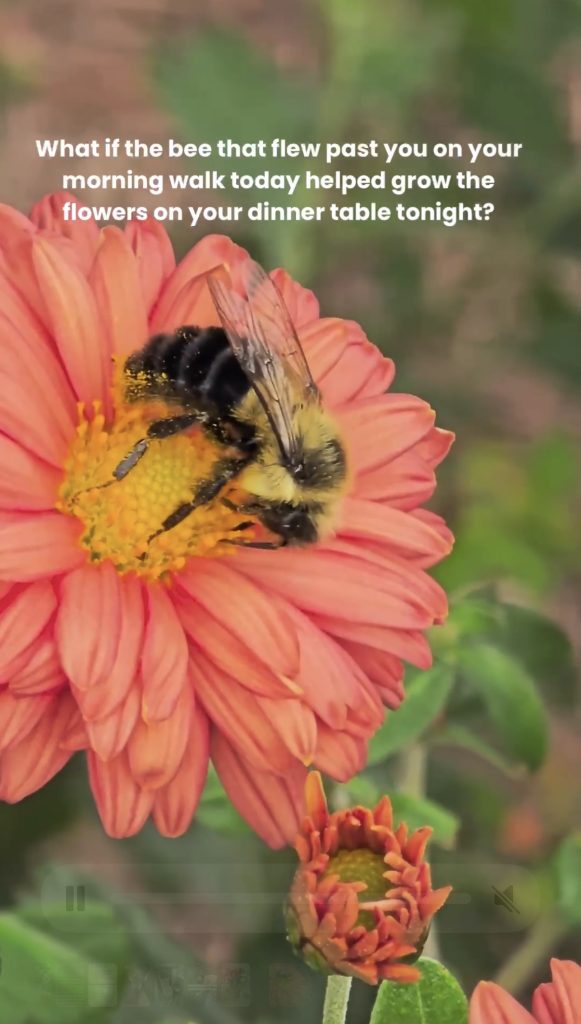
What if the bee that flew past you on your morning walk helped grow the flowers on your dinner table tonight?

We can’t know for certain, of course. But if your flowers were grown by someone nearby, it’s entirely possible that the same local pollinators you see every day visited those plants before they became part of your bouquet.

It’s a beautiful reminder that buying local flowers isn’t just about what’s in the vase. It’s about participating in the health of the place we call home.

Every Flower Farm Supports Life

Flower farms and cutting gardens are more than places where bouquets begin.

Throughout the growing season, they provide habitat and a continuous source of nectar and pollen for bees, butterflies, hummingbirds, and countless other beneficial insects. While the flowers harvested for your bouquet may have only bloomed briefly before being cut, the garden or farm itself helps sustain pollinators throughout the season.

Those pollinators don’t just benefit flower farms. They also help pollinate nearby vegetable gardens, fruit trees, native plants, and wild spaces, contributing to healthier ecosystems across our communities.

When more people choose to buy locally grown flowers, they create demand for more local flower farms. More flower farms mean more land planted with flowers, more habitat for pollinators, and more opportunities for people and nature to thrive together.

One bouquet may seem like a small purchase, but multiplied across hundreds or thousands of people, the impact becomes significant.

Imported Flowers Tell a Different Story

Most flowers sold in the United States are imported from thousands of miles away.

By the time they reach your vase, they’ve traveled through a long supply chain involving refrigerated trucks, cargo planes, warehouses, wholesalers, and retailers.

Those flowers may be beautiful, but they’re disconnected from the ecosystems where we live.

A bouquet grown in your own community has a different story. It was planted in your climate, cared for by someone nearby, harvested at peak freshness, and arranged just a short drive from your home.

It belongs to your community.

A Healthier Community Starts with Small Choices

Choosing local flowers won’t solve every environmental challenge.

But small decisions made by many people have tremendous power.

Every local bouquet supports a grower who is investing in their community. It encourages more flowers to be planted, creates habitat for pollinators, keeps more money circulating locally, and helps preserve green spaces that benefit people and wildlife alike.

These flower farms become places where beauty and biodiversity grow side by side.

Beauty That Gives Back

At Local Blooms, we believe flowers are more than decoration.

They’re a way to strengthen local economies, support small businesses, encourage pollinator-friendly landscapes, and bring more beauty into everyday life.

The next time you buy flowers, imagine the bees and butterflies that may have visited that flower farm before your bouquet was harvested.

That bouquet is more than a gift.

It’s part of a living ecosystem, and your purchase helps that ecosystem continue to flourish.

Looking for locally grown flowers? Visit Local Blooms to discover flower growers in your own community and help create healthier ecosystems, one bouquet at a time.

Posted on Leave a comment

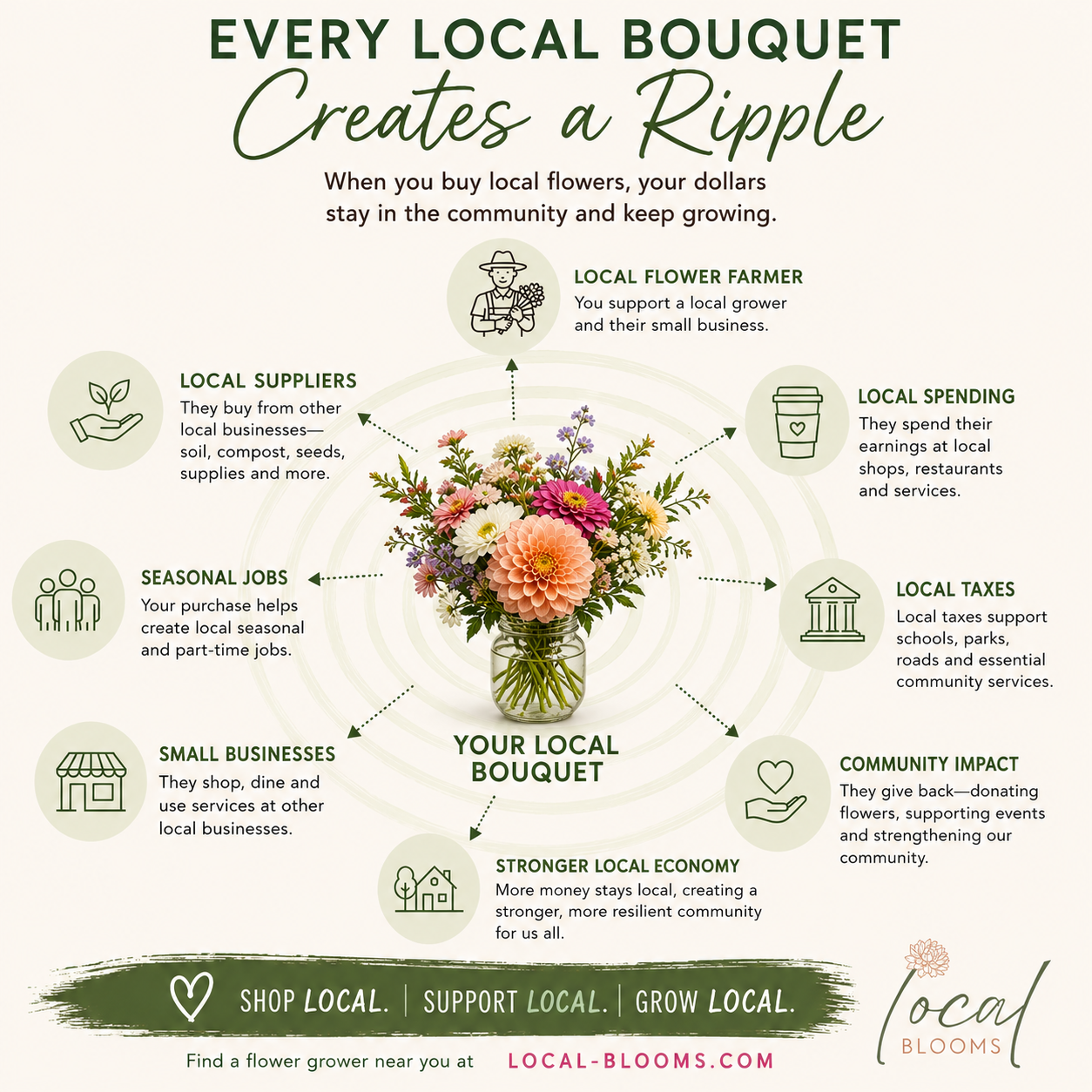
Every Local Bouquet Creates a Ripple: The Economic Power of Buying Local Flowers

When you buy a bouquet of locally grown flowers, you’re doing more than bringing beauty into someone’s day.

You’re creating a ripple.

It’s easy to think of flowers as a simple purchase—a birthday gift, a thank-you, or something bright for the kitchen table. But every bouquet has a story, and where you choose to buy it determines how that story unfolds.

A bouquet from a local flower farmer doesn’t just support one business. It helps strengthen an entire community.

Your Bouquet Supports Local Farmers

Behind every locally grown bouquet is a real person—someone who has spent months preparing soil, planting seeds, battling weeds, watching the weather, and carefully harvesting each stem at its peak.

Many flower farmers are small business owners, often working with family members or seasonal employees. They’re your neighbors. They shop in the same grocery stores, cheer at the same Little League games, and support the same schools and nonprofits.

When you buy directly from them, you’re helping keep small farms thriving.


Your Purchase Helps Other Local Businesses

Flower farmers don’t work in isolation.

To grow beautiful flowers, they purchase:

  • Compost and soil amendments
  • Seeds, bulbs, and plugs
  • Pots, buckets, and growing supplies
  • Irrigation equipment
  • Fuel for deliveries
  • Tools and equipment
  • Printing, bookkeeping, and marketing services

Many of those purchases are made from other small businesses nearby.

Your bouquet helps support an entire network of local entrepreneurs.


Local Businesses Keep Money Circulating

Economists often refer to the “local multiplier effect.” While the exact percentage varies by community, research consistently shows that independently owned businesses recirculate significantly more of every dollar locally than national chains.

Why?

Because local business owners tend to:

  • Hire local employees
  • Purchase from nearby suppliers
  • Use local accountants, mechanics, printers, and contractors
  • Spend their earnings within their own communities

Instead of leaving town, more of your purchase continues circulating through local businesses, creating new opportunities and strengthening your local economy.

That’s the ripple.


Buying Local Helps Create Jobs

Every bouquet requires real hands.

Someone plants the seeds.

Someone harvests every stem.

Someone conditions the flowers.

Someone designs the arrangement.

Someone delivers it to a doorstep.

As flower farms grow, many hire seasonal employees to help during busy spring, summer, and wedding seasons. Your purchase helps create meaningful work while supporting small agricultural businesses.


Strong Communities Are Built One Small Purchase at a Time

Local flower farmers often give back in ways that don’t show up on a receipt.

They donate flowers to school fundraisers.

They support nonprofit events.

They host workshops, farm tours, and community gatherings.

They create beautiful spaces that attract pollinators and bring joy to their neighborhoods.

When local farms succeed, communities become stronger, more connected, and more resilient.


Beauty With a Bigger Impact

Imported flowers often travel thousands of miles before reaching a grocery store cooler.

Locally grown flowers are different.

They’re harvested closer to the day you receive them, reducing transportation while supporting people who live and work in your own community.

Your bouquet becomes more than a gift.

It becomes an investment in your hometown.


Every Bouquet Is a Choice

The next time you’re shopping for flowers, remember that you’re choosing more than colors and blooms.

You’re choosing where your dollars go.

You’re choosing whether they support distant corporations or the small business down the road.

You’re choosing whether your purchase helps another local entrepreneur continue doing work they love.

Every local bouquet creates a ripple.

Let’s make it a good one.

Ready to support a local flower farmer? Visit Local Blooms to find fresh, locally grown flowers near you—or send flowers to someone you love anywhere Local Blooms growers are available. Together, we can strengthen communities, support small farms, and spread a little more joy, one bouquet at a time.

Posted on Leave a comment

Why Do Local Flowers Cost More?

Why Do Local Flowers Cost More?

It’s one of the questions we hear most often.

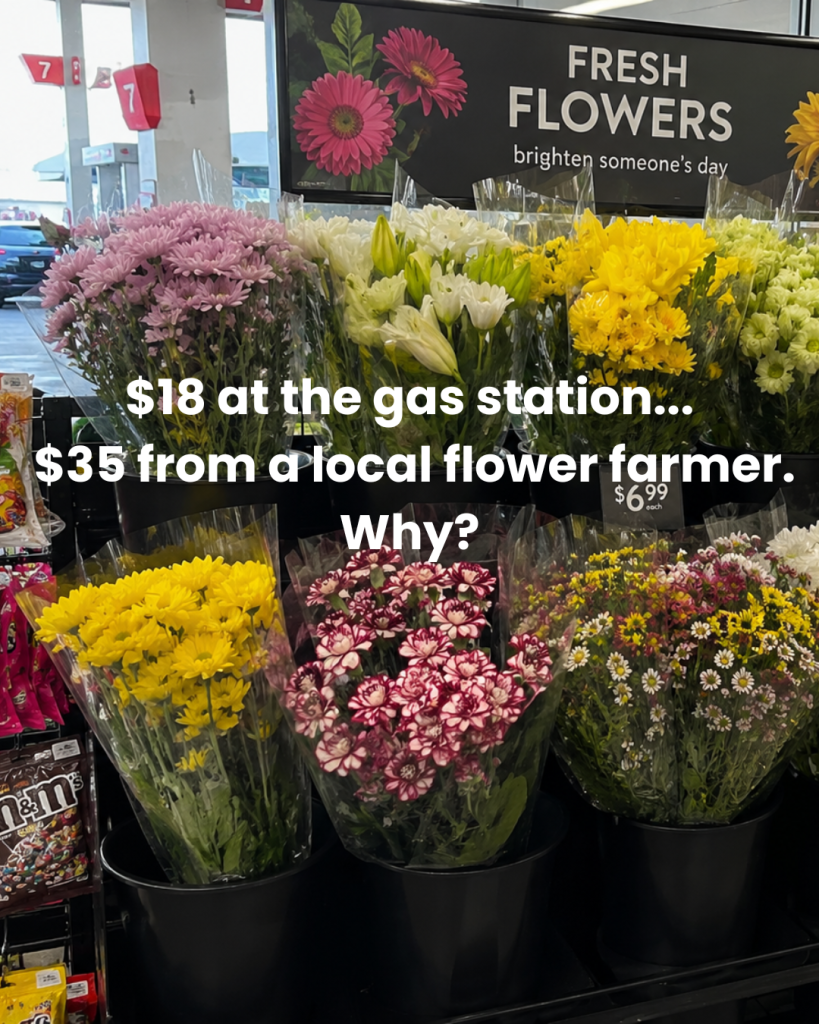
“Why should I spend $45 on a locally grown bouquet when I can buy flowers for $15 at the grocery store?”

It’s a fair question.

The answer isn’t that local flowers are overpriced.

It’s that they’re a completely different product.

Commodity vs. Craft

Most flowers sold in the United States are produced through an enormous international supply chain.

Large farms grow hundreds of thousands—or even millions—of stems at a time. Flowers are harvested in bulk, stored in refrigeration, transported long distances, distributed through wholesalers, and eventually arrive at supermarkets, florists, and convenience stores.

Efficiency keeps prices low.

Independent flower farmers work very differently.

Many Local Blooms growers cultivate flowers on just a fraction of an acre. Some grow in backyards. Others on small family farms.

Almost every step is done by hand.

What You’re Actually Paying For

When you purchase a locally grown bouquet, you’re helping cover the real costs of growing flowers responsibly.

That includes:

  • Seeds, bulbs, tubers, and plants
  • Compost and healthy soil
  • Irrigation
  • Hand weeding
  • Harvesting at peak freshness
  • Conditioning each stem
  • Designing the arrangement
  • Packaging
  • Delivery or pickup preparation

Growing flowers is incredibly labor intensive.

A single bouquet may represent months of planning before it’s ever placed into a vase.

Freshness Matters

Local flowers are usually harvested within a day or two of reaching you.

That often means:

  • Longer vase life
  • Better fragrance
  • More vibrant colors
  • Flowers harvested at their ideal stage

Instead of surviving weeks in transit, they’re able to shine exactly as nature intended.

You Get Something Unique

Local flower farmers grow varieties that don’t ship well.

Sweet peas.

Specialty dahlias.

Unique zinnias.

Fragrant garden roses.

Interesting foliage.

Many of these simply aren’t practical for large commercial flower operations.

That’s why local bouquets often feel more personal, seasonal, and full of character.

Your Purchase Stays in Your Community

Buying local flowers keeps money circulating close to home.

You’re supporting:

  • small businesses
  • local agriculture
  • women-owned farms
  • pollinators
  • greener communities

Your bouquet helps someone continue doing meaningful work right where you live.

It’s Not About Comparing

A grocery store bouquet has its place.

So does a local bouquet.

The difference is understanding that they aren’t the same product.

One is designed for efficiency.

The other is grown with care, harvested by hand, and arranged specifically for someone to enjoy.

When you choose local flowers, you’re investing in beauty, community, and craftsmanship.

And that’s something worth celebrating.

Posted on Leave a comment

Where Do Your Flowers Come From?

Where Do Your Flowers Come From?

Do you know where the flowers in your last bouquet were grown?

It’s not a question most of us think to ask.

When we buy flowers, we’re usually focused on the occasion. A birthday. A thank you. A celebration. A sympathy gift. We pick the bouquet we love, take it home, or send it to someone special.

But where those flowers actually came from? Most of us have no idea.

I know I didn’t.

Before I started growing flowers, I assumed most bouquets came from local florists, nearby greenhouses, or farms somewhere in the United States. It never crossed my mind that the flowers I was buying might have traveled thousands of miles to get to me.

Then I learned how the flower industry really works.

Where Most Flowers Sold in the United States Are Grown

Today, most flowers sold in the United States are imported. Colombia alone supplies roughly 60% of the flowers sold in the U.S. Around 90% of imported flowers enter the country through Miami before being distributed nationwide. This Valentine’s Day, nearly 1 billion flower stems passed through Miami’s cargo facilities.

Think about that for a moment.

Nearly a billion stems moving through a single city in just a few weeks.

The modern flower industry is an incredible logistical achievement. Flowers are harvested, packed, refrigerated, flown across continents, inspected, distributed, and delivered to stores across the country, often while still looking beautiful when they arrive.

But somewhere along the way, many of us lost our connection to where flowers come from.

Why Knowing Where Your Flowers Come From Matters

We know where our vegetables come from. We talk about local food. We visit farmers markets. We read labels on coffee and chocolate.

Yet flowers are often treated differently.

Most bouquets don’t tell us who grew them, where they were grown, or how far they traveled.

That’s one of the reasons local flowers have become so meaningful to me.

When you buy from a local grower, you’re not just buying flowers. You’re supporting a person in your community. Someone who planted seeds months ago, watched the weather forecast obsessively, fought weeds and pests, celebrated the first blooms of the season, and harvested those flowers by hand.

The Benefits of Buying Local Flowers

Local flowers also reconnect us with something we’ve largely forgotten: flowers have seasons.

Just as strawberries taste best in spring and peaches shine in summer, flowers each have their moment. Peonies don’t bloom year-round. Sweet peas have a season. Dahlias arrive when summer begins to fade. Every season brings something new to enjoy.

There’s something special about that.

Buying local flowers also helps support small farms, local gardeners, and regional economies. It creates a stronger connection between the people growing flowers and the people enjoying them.

Seasonal Flowers Connect Us to Nature

One of the joys of locally grown flowers is experiencing blooms when they’re naturally in season.

Spring brings tulips, ranunculus, and peonies. Summer offers zinnias, sunflowers, and cosmos. Late summer and fall are known for dahlias and other vibrant blooms.

Just like seasonal produce, seasonal flowers remind us that nature changes throughout the year. Each season offers something unique and beautiful.

Imported Flowers Still Play an Important Role

I’m not suggesting everyone stop buying imported flowers. Imported flowers have made bouquets more accessible and available throughout the year, and they play an important role in the floral industry.

But I do think people deserve to know where their flowers come from and have the opportunity to choose local when they can.

Flowers tell a story.

A story of place.

A story of season.

And a story of the people who grow them.

Support Local Flower Growers Near You

The next time you receive a bouquet, take a moment to wonder where it was grown.

You might be surprised by the answer.

And if you’d like to support local flower growers, Local Blooms makes it easy to find locally grown flower arrangements from real farmers and gardeners near you.