
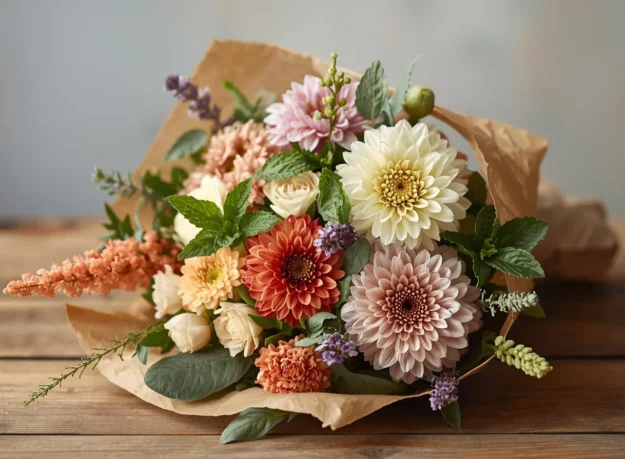
A bouquet can feel simple
A handful of flowers, gathered together, wrapped and ready to brighten someone’s day.
But behind every bouquet is something you don’t see.
Time.
Care.
Attention.
And a person who has been tending to those flowers long before they ever reached your hands.
It starts long before the bloom
Most flowers don’t begin in spring.
They begin months earlier—sometimes in the quiet of winter.
Seeds are chosen carefully.
Plans are made for what will grow well together.
Trays are filled, watered, watched.
There’s patience here.
And a lot of waiting.
Growing flowers is a learned craft
Flower growers don’t just plant seeds and hope for the best.
Many have spent years learning:
- how to start seeds successfully
- how to build healthy soil
- how to succession plant for continuous blooms
- how to handle each variety at just the right stage
They take courses.
They learn from one another.
They experiment, adjust, and keep learning season after season.
There’s a quiet level of expertise here that often goes unseen.
Growing is daily work
Once things start growing, it’s not passive.
Flowers need:
- consistent watering
- protection from wind, heat, and cold
- support as they grow
- attention to pests and disease
Some days it’s calm and steady.
Some days it’s unpredictable.
But every day, someone is showing up.
There aren’t really “days off” in the growing season.
Timing matters more than you think
Flowers aren’t harvested whenever it’s convenient.
They’re harvested at just the right moment.
Too early, and they won’t open well.
Too late, and they won’t last.
And that timing doesn’t always happen at a comfortable hour.
Growers are often out:
- early in the morning before the heat sets in
- in the cold, when temperatures are still near freezing
- in the height of summer, before the sun gets too strong
- sometimes with a headlamp, racing daylight
Because that’s what the flowers need.
The work doesn’t stop after harvest
Cutting the flowers is only part of the process.
They’re:
- placed into fresh water right away
- cleaned and prepared
- sometimes given time to rest before arranging
Every step is done with care so that when they reach you,
they’re at their best.
A bouquet is created, not just gathered
A bouquet isn’t random.
It’s thoughtfully put together:
- color
- texture
- movement
- what’s in season
Each stem is chosen with intention.
What feels natural and easy has been carefully considered.
This part matters most
When flowers are grown locally,
you’re not buying from a system.
You’re buying from a person.
Someone who:
- planted the seeds
- paid attention to the weather
- adapted when things didn’t go as planned
- went out to harvest at just the right time
- chose those exact stems for your bouquet
There’s care in that.
And whether you realize it or not,
you can feel the difference.
A different kind of bouquet
Locally grown flowers may not all look the same.
They’re seasonal.
They’re a little more unique.
They reflect what’s actually growing right now.
But they’re also:
- fresher
- more vibrant
- more connected to where they came from
The next time you hold a bouquet
It might still feel simple.
But maybe you’ll see it a little differently.
Not just as flowers—
but as something that was grown, gathered, and created
with a lot of care along the way.
If you’re curious
If you’re curious what’s growing near you,
and want to support the people behind these bouquets,
you can explore local flowers through Local Blooms.