
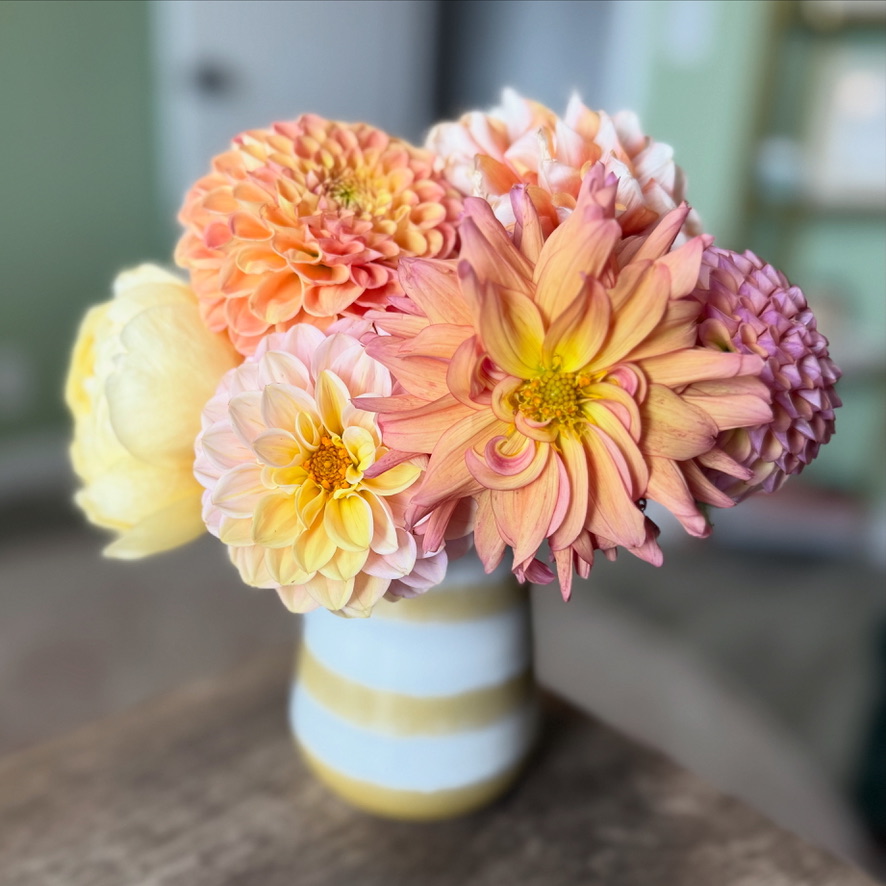
A bouquet feels simple.
But the journey behind it is anything but.
Most of us don’t think twice about where our flowers come from. We pick up a bouquet at the grocery store or send one to a friend, assuming it’s fresh, seasonal, maybe even local.
But the truth is—most flowers have traveled farther than we have.
Where most flowers really come from
Today, about 75–80% of cut flowers sold in the United States are imported.
The majority come from countries like:
- Colombia
- Ecuador
- Kenya
- Ethiopia
- The Netherlands
Colombia alone is the largest supplier to the U.S., exporting billions of stems each year.
These regions are chosen for year-round growing conditions and lower production costs—but they are often thousands of miles away from the person eventually holding the bouquet.
The miles (and stops) along the way
Before a bouquet reaches your hands, it typically travels 1,500 to over 4,000 miles—and sometimes more than 5,000 miles.
And it’s not a direct journey.
A single stem might:
- Be harvested on a large-scale farm
- Placed into refrigeration immediately
- Packed into boxes and transported to an airport
- Flown (in refrigerated cargo) to a hub—often Miami
- Sent to a wholesaler
- Distributed to a florist or grocery store
- Finally arranged and sold
At every step, temperature and timing are tightly controlled—because the clock is already ticking on vase life.
The role of chemicals
To survive this long journey, flowers are often treated with chemicals at multiple stages.
Large-scale cut flower production can involve:
- Pesticides and fungicides during growing
- Chemical preservatives after harvest
- Treatments to slow blooming and extend shelf life
Unlike food, flowers are not subject to the same pesticide residue regulations, and studies have found measurable residues on imported stems.
These treatments help flowers look perfect after days (or weeks) in transit—but they’re also part of what makes the supply chain so intensive.
The climate cost of a bouquet
Flowers are perishable. That means speed—and refrigeration—are essential.
Most imported flowers travel via:
- Refrigerated airplanes
- Refrigerated trucks
- Climate-controlled storage facilities
This combination creates a significant environmental footprint.
Because of long-distance transport and cold storage, a single bouquet can carry a surprisingly high carbon cost—especially when flown thousands of miles for a product that may last only a week or two.
So what’s the alternative?
There’s nothing wrong with loving flowers.
(If anything, we need more of that.)
But there is another way.
Local flowers:
- Travel a fraction of the distance
- Are often grown with fewer chemicals
- Last longer because they’re fresher
- Reflect the season and place they were grown
- Connect you directly to a person—not a supply chain
A small shift with a big impact
The next time you buy flowers, it’s worth asking a simple question:
Where did these come from?
Because behind every bouquet is a story.
And when you choose local, it becomes a much shorter—and much more meaningful—one.
Shop flowers from local growers here
